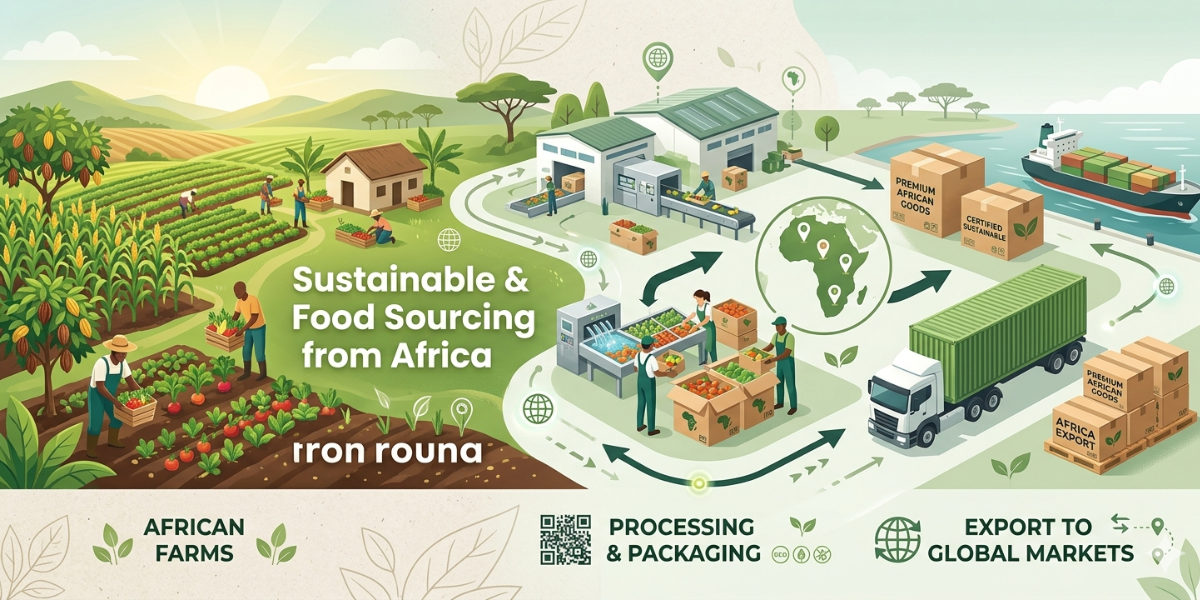
Sustainable Food Sourcing Africa | Food Sourcing from Kenya

How to Source Traceable and Sustainable Agricultural Products from Africa

Global demand for responsibly sourced food is no longer a niche preference—it’s a market expectation. Buyers, retailers, and consumers are increasingly prioritizing sustainability, ethical sourcing, and full supply chain transparency. This shift is driving interest in sustainable food sourcing Africa, where agricultural richness meets growing compliance with international standards. For global buyers, Africa—particularly Kenya—offers an opportunity to align procurement with both quality and ethical values.

What Do Traceability and Sustainability Really Mean?

Traceability refers to the ability to track a product through every stage of the supply chain—from farm to export. This includes visibility into origin, handling processes, and logistics. For buyers, traceability reduces risk, ensures compliance, and builds trust with end consumers.

Sustainability, in agricultural sourcing, encompasses environmentally responsible farming, fair labor practices, and long-term economic viability for producers. A sustainable supply chain minimizes ecological impact while supporting farming communities.

Together, these form the backbone of an ethical food supply chain, ensuring products are not only high-quality but responsibly produced.

How African Suppliers Are Meeting Global Standards

African exporters, especially in Kenya, are rapidly aligning with global certification and compliance frameworks. Producers are investing in:

  • Good Agricultural Practices (GAP) to ensure safe and sustainable farming
  • Certifications such as GlobalG.A.P., Organic, and Fairtrade
  • Digital traceability systems for real-time supply chain tracking
  • Improved post-harvest handling and cold chain logistics

Kenya has become a leading hub for food sourcing from Kenya, thanks to its advanced export infrastructure and regulatory oversight. Suppliers are increasingly export-ready, meeting strict requirements from European, Middle Eastern, and North American markets.

How Buyers Can Verify Traceable Agriculture Suppliers

Sourcing from Africa requires due diligence. Here’s how buyers can confidently vet suppliers:

1. Request Documentation

Ensure suppliers can provide:

  • Farm-level records
  • Export licenses
  • Phytosanitary certificates
  • Batch or lot tracking data
2. Check Certifications

Look for internationally recognized standards such as:

  • GlobalG.A.P.
  • Organic certifications (EU, USDA)
  • Fairtrade or Rainforest Alliance

These validate both sustainability and ethical practices.

3. Evaluate Supply Chain Visibility

Reliable suppliers should offer transparency across:

  • Farm sourcing locations
  • Processing and packaging facilities
  • Logistics partners

Digital platforms or traceability systems are a strong advantage.

4. Conduct Audits or Partner Locally

When possible, arrange third-party audits or work with regional sourcing agents to verify operations on the ground.

A Practical Example: PUREGROWTH AGRIBUSINESS LIMITED

Companies like PUREGROWTH AGRIBUSINESS LIMITED exemplify how African suppliers are evolving. By focusing on traceability, sustainable farming partnerships, and export-grade quality control, PureGrowth Agri demonstrates what buyers should expect from modern traceable agriculture suppliers. Their approach integrates farmer networks with transparent sourcing systems, ensuring both consistency and accountability.

Conclusion: Build a Responsible Supply Chain Today

Sourcing agricultural products from Africa is no longer just about cost or availability—it’s about building a resilient, ethical, and transparent supply chain. By prioritizing traceability, verifying certifications, and partnering with credible exporters, buyers can confidently tap into Africa’s agricultural potential.

If you’re looking to strengthen your sourcing strategy with trusted partners, now is the time to explore opportunities with experienced suppliers like PUREGROWTH AGRIBUSINESS LIMITED. Connect today to build a sustainable and traceable supply chain that meets global expectations.